Creative Minds 𖹭 Happy Hearts

Natural Pesticides on Aphids Lab Sheet, 4-Day Experiment
Neem oil versus garlic spray versus soap spray versus chili pepper, the natural pesticides on aphids lab puts four real treatments head to head across four days of careful counting.
Your student sets up five potted plants, each assigned a different treatment, then counts aphids daily for four days and records the numbers in a structured data table. The question driving the whole experiment is simple and testable: which natural pesticide actually reduces aphid populations fastest? Designed for grades 5 to 7, the sheet walks through every step from labeling plants to spraying at consistent times, with a built-in safety note about keeping treatments separate.
This natural pesticides on aphids lab works well as a standalone unit on pest management or as part of a broader plant science or ecology study. A dedicated Draw and Observe panel asks students to sketch the plants on Day 0 and Day 4, adding a visual record alongside the quantitative data table. Five analysis questions push your homeschooler past the numbers, asking them to compare treatments, evaluate the control group, and form an opinion about which pesticide they would actually use in a garden.
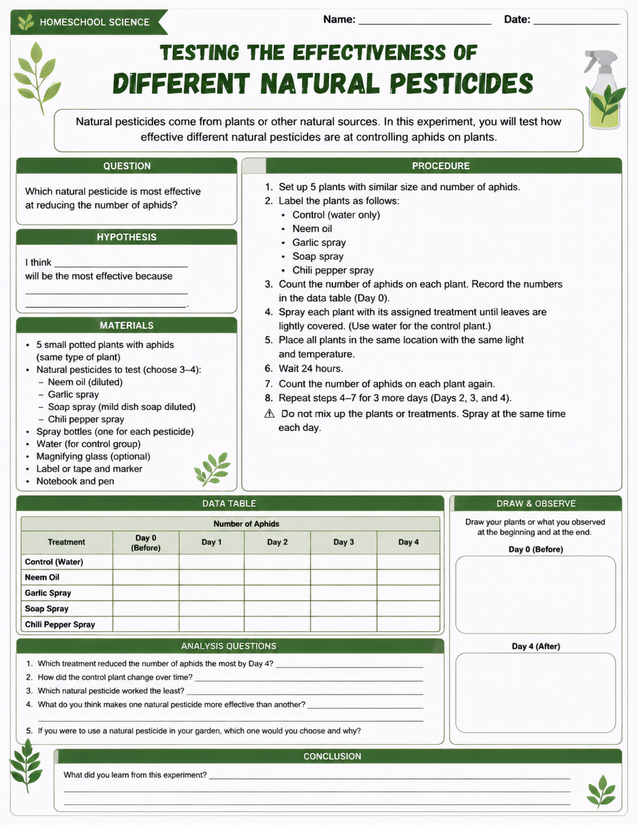
Five plants, four treatments, four days: this natural pesticides on aphids lab gives grades 5-7 homeschoolers a complete controlled experiment.
Investigating the Natural Pesticides on Aphids Lab Over Four Days

Usage Notes
Neem oil, diluted mild dish soap, garlic spray, and chili pepper spray are the four treatments listed, all of which can be mixed at home from pantry and garden-store supplies. You will also need five small potted plants with an existing aphid population, spray bottles, a magnifying glass, labels, and a notebook. Spraying plant treatments near eyes and skin warrants a quick safety conversation before Day 0.

Printing Tips
A 24-lb or heavier sheet keeps the data table legible and sturdy when the page sits on a clipboard next to the plants for daily counting sessions. Slip it into a plastic page protector inside a science lab binder once the experiment wraps, so the completed data and sketches stay together.