Creative Minds 𖹭 Happy Hearts

Pollution Effects on Aquatic Ecosystems Lab Sheet
Soil, detergent, and vegetable oil go into three jars, and your student records what happens to the plants and animals inside. Pollution effects on aquatic ecosystems become visible within 24 hours.
This lab sheet guides grades 4-7 students through a controlled experiment comparing a clean water container against two containers each holding a different pollutant, such as soil or detergent. Your student records water clarity, animal behavior, and plant condition at four time points: 0 minutes, 30 minutes, 1 hour, and 24 hours. The data table is structured to capture observations across all three containers side by side, making it easy to draw direct comparisons.
As a standalone unit study lesson or an anchor activity in an environmental science sequence, this sheet on pollution effects on aquatic ecosystems asks your homeschooler to move from hypothesis through procedure to written conclusions. Three closing questions push students to name what changed in each container, explain why, and propose a real-world solution for reducing pollution in lakes, rivers, and ponds. A bonus ‘Think Further’ prompt invites them to design a follow-up test with a pollutant of their own choosing.
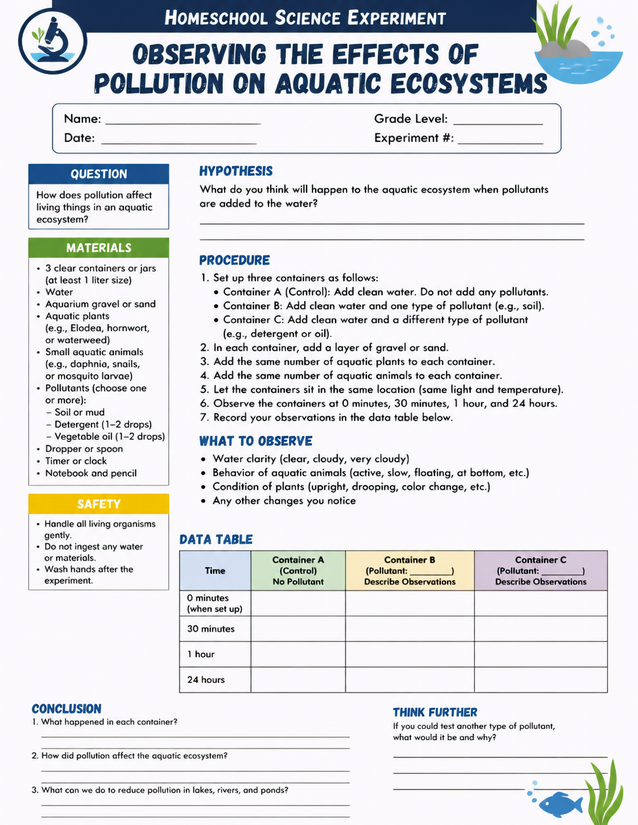
Grades 4-7 homeschoolers observe pollution effects on aquatic ecosystems using three containers, live plants, and small animals. Instant download.
Investigating Pollution Effects on Aquatic Ecosystems

Usage Notes
Aquarium gravel or sand, aquatic plants like Elodea or hornwort, and small animals such as daphnia or snails are listed as materials, so some items may require a trip to a pet or garden store. Household pollutants, soil, dish detergent, and vegetable oil, cover the experiment’s variable containers. The safety section specifically notes handling living organisms gently and washing hands after the experiment, which is worth reviewing with your student before setup.

Printing Tips
Card stock at 65 lb or heavier holds up when the sheet sits near water containers during a 24-hour observation window. Keep it as a loose sheet on a clipboard rather than bound into a notebook, so your student can move it around without smudging wet hands across a full binder.