Creative Minds 𖹭 Happy Hearts

Mold Spores Under Different Conditions Lab Sheet
Four bags of bread, four environments, and ten days of waiting: recording mold spores under different conditions is the experiment that makes students genuinely look forward to checking the refrigerator.
Grades 5-8 homeschoolers set up four resealable bags, each containing one slice of bread treated to a different combination of temperature, moisture, and light. The sheet walks through the full procedure: labeling each bag, spraying or leaving bread dry, placing bags in warm, cold, and dark locations, then observing daily for seven to ten days and recording both growth and color in a structured table. Students studying mold spores under different conditions are building real observational skills alongside vocabulary around humidity, temperature, and decomposition.
This lab works well inside a unit study on microbiology, decomposition, or environmental science, and it stands on its own as a standalone investigation requiring no prior lab experience. Four open-ended analysis questions ask students to identify which condition produced the most and least growth, explain why moisture and temperature matter, and summarize what they learned. A Day 10 drawing section for each bag adds a visual record that rounds out the lab notebook entry.
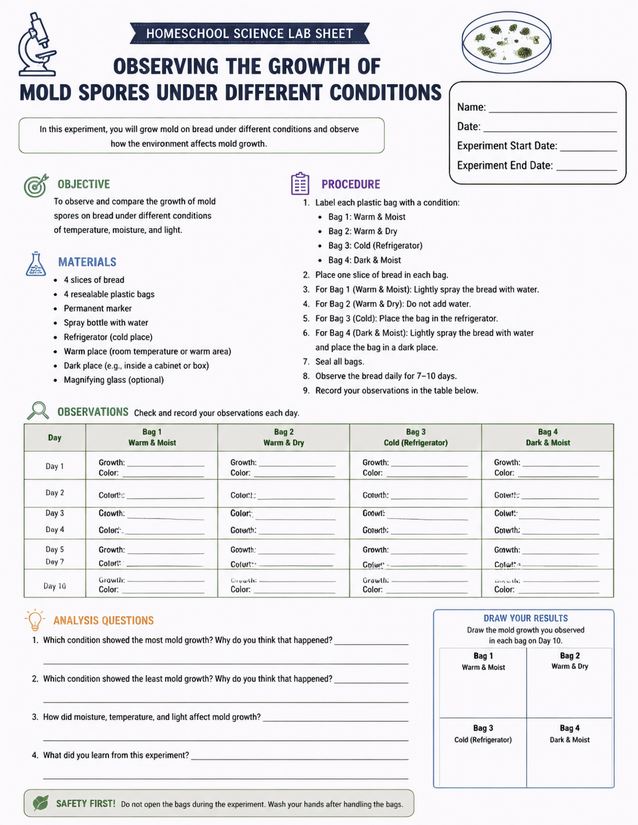
Four bread bags, seven to ten days, one clear answer: your grades 5-8 homeschooler records mold spores under different conditions daily.
Investigating Mold Spores Under Different Conditions

Usage Notes
Bread, resealable plastic bags, a permanent marker, and a spray bottle cover the core materials list. A refrigerator and a dark cabinet or box are the only setup requirements beyond household basics. The sheet includes a prominent safety note: bags must stay sealed throughout the experiment, and students should wash their hands after handling them.

Printing Tips
Standard 20 lb copy paper works fine for single-use recording, but the daily observation table fills up quickly, so a crisp print at full size matters. Slip the sheet into a plastic page protector inside a lab notebook if you want the record protected from spills during a ten-day observation window.