Creative Minds 𖹭 Happy Hearts

Coral Reef Ecosystem Model Lab Sheet, Biotic and Abiotic Labels
Sand, craft coral, toy fish, and blue food coloring combine into a hands-on coral reef ecosystem model lab sheet your student will actually want to fill out.
Structured around the question of how living and nonliving things interact in a reef, this coral reef ecosystem model lab sheet walks your homeschooler through a full scientific process. Students form a hypothesis, follow an eight-step procedure to build a physical reef model in a clear container, then draw and label the biotic and abiotic parts they observe. It suits grades 4 through 6 and introduces vocabulary including ecosystem, habitat, symbiosis, and biodiversity directly on the page.
The sheet fits naturally into an ocean unit study or a broader ecosystems sequence covering biomes and food webs. It works as a standalone afternoon lab or as the hands-on anchor for a multi-day lesson on marine habitats. By completing the observation drawing, data notes, and conclusion sections, your student demonstrates the ability to connect physical model-building with scientific reasoning and environmental thinking.
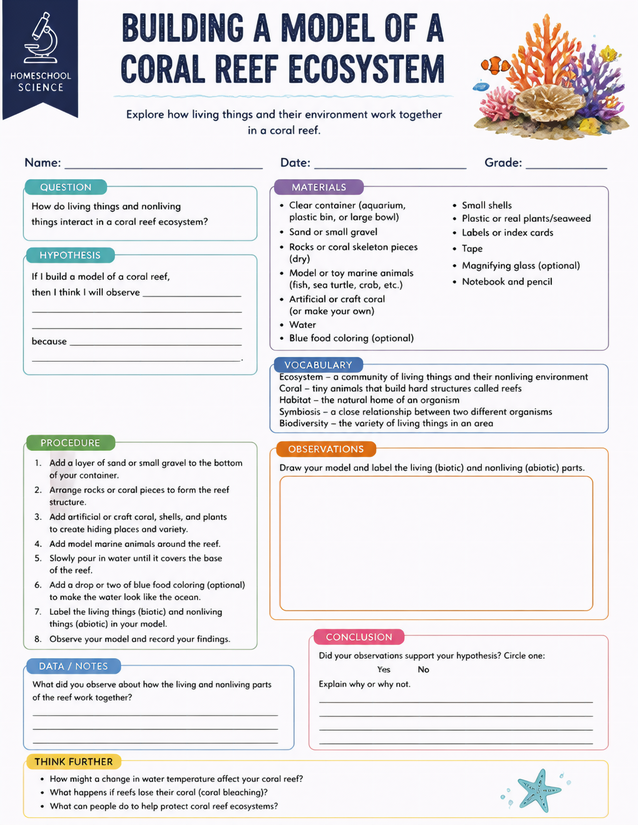
Explore living and nonliving reef interactions with this coral reef ecosystem model lab sheet, designed for grades 4 through 6.
Exploring Your Coral Reef Ecosystem Model Lab Sheet

Usage Notes
Sand or small gravel, rocks or dry coral skeleton pieces, and a clear container are the base materials, all household or easily sourced. Model marine animals, artificial coral, small shells, and optional blue food coloring round out the build. Water is involved, so set up on a waterproof surface and supervise younger students when adding liquid to the container.

Printing Tips
Twenty-four pound paper handles pencil and colored pencil work in the observation drawing box without bleed-through. A single printed sheet slides into a science lab notebook after the build, or clip it to a clipboard so your student can record notes right at the experiment station.