Creative Minds 𖹭 Happy Hearts

Effect of Different Soils on Seed Germination Lab Sheet
Four cups, four soils, and one question worth ten days of watching: your student is about to find out exactly how much the effect of different soils on seed germination actually matters.
This lab sheet guides your homeschooler through a structured comparison of garden soil, potting soil, sand, and clay soil using bean or radish seeds planted five per cup. Students record daily germination counts in a ten-day data table, note observations, and answer four analysis questions about which soil performed best and why the textures differed. It fits naturally into a grades 4-6 earth science or plant biology unit study.
The sheet works well as a standalone experiment or as a companion piece after your student has already explored soil composition and plant needs. By completing it, your homeschooler demonstrates the effect of different soils on seed germination through direct observation rather than secondhand reading, and the Think Further prompt pushes them to consider water, sunlight, and temperature as additional variables worth testing next.
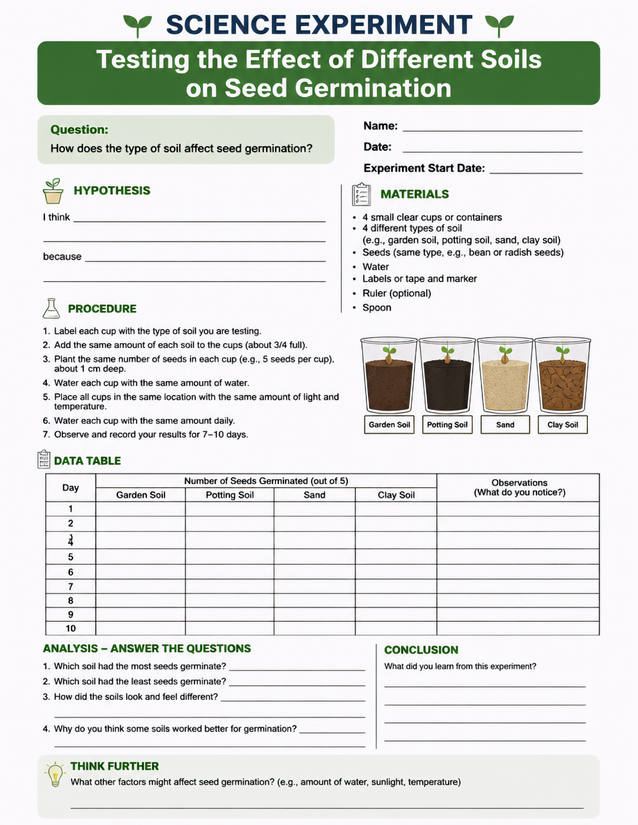
Grades 4-6 homeschoolers compare the effect of different soils on seed germination across ten days using four soil types. Instant download.
Exploring the Effect of Different Soils on Seed Germination in Your Lab

Usage Notes
Four small clear cups or containers, labels, a spoon, water, and seeds are all household or easily sourced items. The one specialty consideration is gathering four genuinely distinct soil types: garden soil and sand are usually on hand, but potting soil and clay soil may require a quick hardware store trip. No heat or chemicals are involved, though younger students should wash hands after handling soil samples.

Printing Tips
Twenty-four pound paper holds up better than standard copy weight when cups are nearby and small hands are recording damp-fingered observations. Slide the sheet into a plastic page protector inside a lab notebook so it stays flat across the full ten days of data collection.