Creative Minds 𖹭 Happy Hearts

Extracting DNA from Strawberries, Homeschool Science Experiment
Extracting DNA from strawberries sounds like something from a university lab, but your student can watch white, cloudy strands appear in a glass right on your kitchen counter.
Extracting DNA from strawberries is a hands-on experiment that walks students through crushing fresh strawberries, mixing a soap-and-salt solution, filtering the extract, and layering chilled rubbing alcohol to isolate visible DNA strands. The sheet covers the full seven-step procedure, an overview explaining what DNA is and why strawberry cells release it easily, and a draw-what-you-saw observations box. It suits grades 4 through 8, with clear enough instructions that younger students can follow along with parent guidance and enough science vocabulary to challenge older ones.
This lab sheet works beautifully as a standalone unit study entry point into genetics or as a complement to lessons on cells and living organisms. Four reflection questions ask your student to describe what the DNA looked like, explain why the alcohol was added slowly, identify where in the strawberry the DNA came from, and name other living things that contain DNA. Completing those questions moves the experiment from a cool kitchen demo to documented scientific thinking.
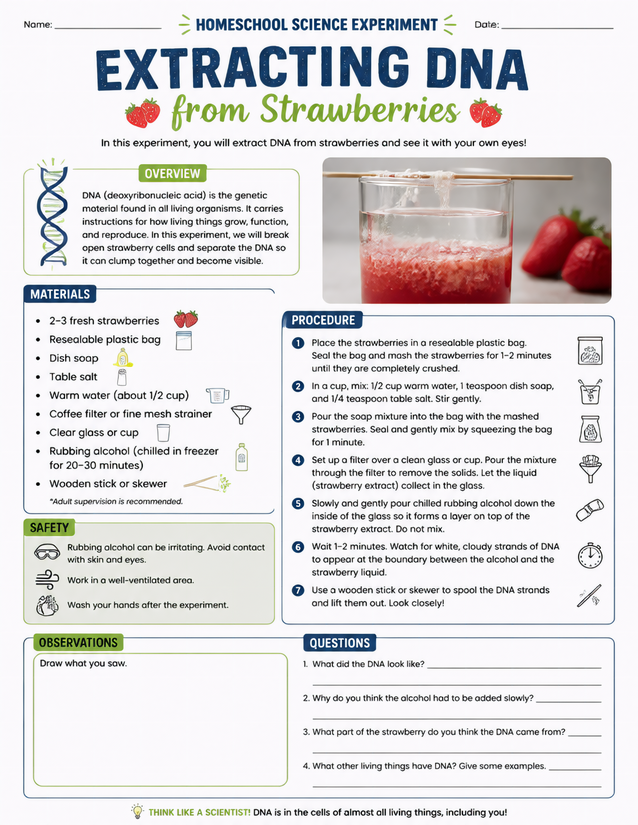
Grades 4 and up will love extracting DNA from strawberries with this seven-step homeschool science experiment sheet. All household materials included.
Getting Started with Extracting DNA from Strawberries

Usage Notes
Nearly every material on this sheet is already in most kitchens: fresh strawberries, dish soap, table salt, warm water, a resealable bag, and a clear glass or cup. The one item requiring advance planning is rubbing alcohol, which the sheet specifies must be chilled in the freezer for 20 to 30 minutes before use. The safety section notes that rubbing alcohol can irritate skin and eyes, so adult supervision is recommended and the sheet specifically calls out working in a well-ventilated area.

Printing Tips
Twenty-four-pound paper holds up better than standard copy weight when students are writing during a messy, hands-on experiment. Print one sheet per student and clip it to a hard-surface clipboard so it stays flat next to the workspace without getting pulled into the experiment.