Creative Minds 𖹭 Happy Hearts

Growing Radishes Under Different Light Wavelengths, Science Lab Sheet
Four pots, four light colors, one question: growing radishes under different light wavelengths reveals what photosynthesis actually prefers, and your student records every centimeter of the answer.
This lab sheet guides grades 4 to 7 students through a two-week experiment on how red, blue, green, and white light wavelengths each affect radish growth. Your homeschooler fills in a hypothesis, follows a seven-step method, and measures plant height in centimeters every two to three days, logging results in a structured data table that tracks Day 0 through Day 14 across four light conditions.
The growing radishes under different light wavelengths experiment works as a standalone unit or fits naturally into a botany, photosynthesis, or light and energy unit study. Completing the sheet requires your student to distinguish constants from variables, draw observational conclusions, and connect measured data to the underlying biology of how plants use light. Extension prompts on the sheet invite testing additional colors like yellow, purple, and amber, extending the inquiry further if your schedule allows.
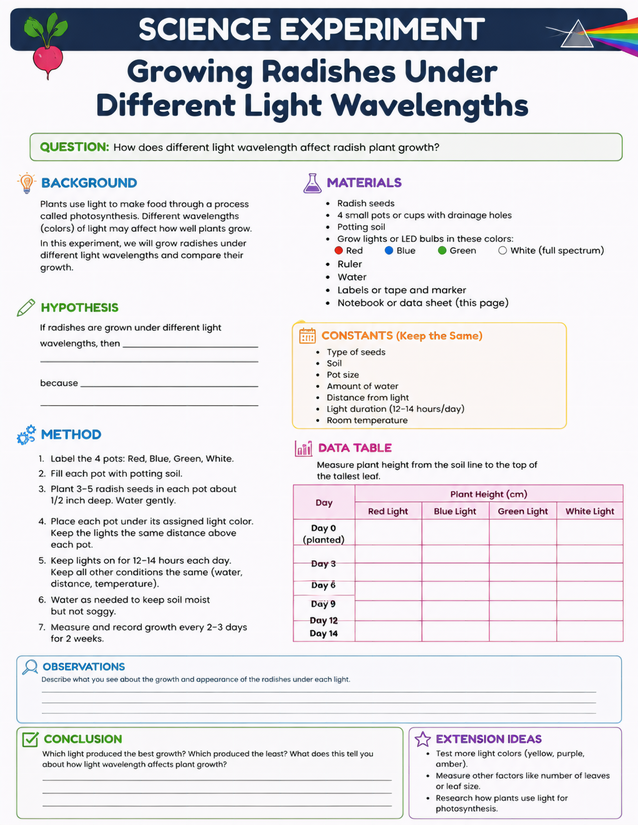
Grades 4 to 7 homeschoolers explore growing radishes under different light wavelengths using red, blue, green, and white LED bulbs over two weeks.
Recording Results for Growing Radishes Under Different Light Wavelengths

Usage Notes
Radish seeds, potting soil, and four small pots or cups with drainage holes handle the plant side of this experiment. The specialty item is the light source: the sheet specifies red, blue, green, and white grow lights or LED bulbs, which your student keeps running 12 to 14 hours per day. No open flame or chemicals are involved, but the LED bulbs should be positioned at a consistent distance from each pot throughout the full two weeks.

Printing Tips
A 24-pound or heavier paper prevents ink bleed-through when students press down to write daily measurements. Loose sheets on a clipboard work well here since your student returns to the same page every two to three days, and slipping it into a plastic sheet protector between recording sessions keeps it clean near soil and water.