Creative Minds 𖹭 Happy Hearts

Making a Model of the Immune System Response, Pom-Pom Lab
Green pom-poms are germs, white ones are white blood cells, and blue beads are antibodies. Making a model of the immune system response has never been this hands-on or this easy to set up.
Your student will build a physical, touchable model of how the body fights infection using a bowl, colored pom-poms, and beads to represent germs, white blood cells, and antibodies in sequence. The sheet guides grades 4-7 homeschoolers through six numbered steps, from placing germs into the body container all the way to leaving blue antibodies behind to demonstrate immune memory. A model key with labeled illustrations anchors each component before the lab begins.
Making a model of the immune system response works well as a standalone immune system lesson or as the hands-on anchor of a longer human body unit study. Six labeled observation boxes ask your student to draw or describe what happened at each stage, and a conclusion prompt plus a Think More question about immune memory push the science beyond the activity itself. Completing the sheet demonstrates that your homeschooler can sequence an immune response and explain why memory cells matter.
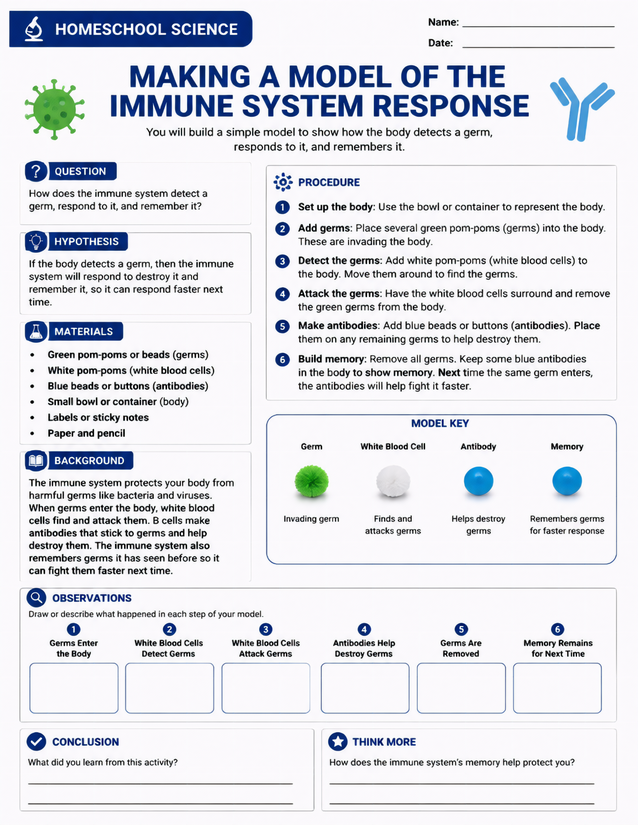
Grades 4-7 students explore making a model of the immune system response using pom-poms, beads, and a bowl. Instant download included.
Investigating Making a Model of the Immune System Response at Home

Usage Notes
All materials listed are household or craft-bin staples: green pom-poms or beads for germs, white pom-poms for white blood cells, blue beads or buttons for antibodies, a small bowl or container, labels or sticky notes, and paper and pencil. No specialty supplies are needed, which makes this easy to pull together on short notice. No safety concerns are implied by the sheet, though small beads and pom-poms should be kept away from very young siblings.

Printing Tips
A single loose sheet on a clipboard keeps it accessible while your student moves pom-poms around the bowl. Twenty-four lb paper gives enough surface for pencil and marker work in the six observation boxes without bleed-through.