Creative Minds 𖹭 Happy Hearts

Making a Simple Telegraph Using Morse Code, LED Circuit
One press of a button, one flash of an LED, and suddenly dots and dashes mean something. Making a simple telegraph using Morse code turns electrical theory into a conversation your student can actually have.
This lab sheet guides your homeschooler through building a working telegraph circuit using a 1.5V AA battery, an SPST push button switch, a 330-ohm resistor, and an LED. The guiding question, how can we send messages using electrical signals, anchors the experiment in real communication history. A background section explains how Morse code encodes letters and numbers as short and long signals, and a circuit diagram shows exactly how the components connect before your student touches a single wire. Designed for grades 4-7, this is a strong fit for a unit study on electricity, communication technology, or the history of science.
Making a simple telegraph using Morse code works equally well as a standalone lesson or as part of a broader electricity sequence alongside series and parallel circuit experiments. The full Morse code chart on the sheet, covering every letter A through Z and digits 0 through 9, lets your student encode and decode real messages with a partner rather than simply watch the LED blink. Three reflection questions at the bottom ask what happened when the button was pressed, how dots and dashes help send messages, and what the student learned about communication and signals, giving you a built-in way to assess conceptual understanding beyond the build itself.
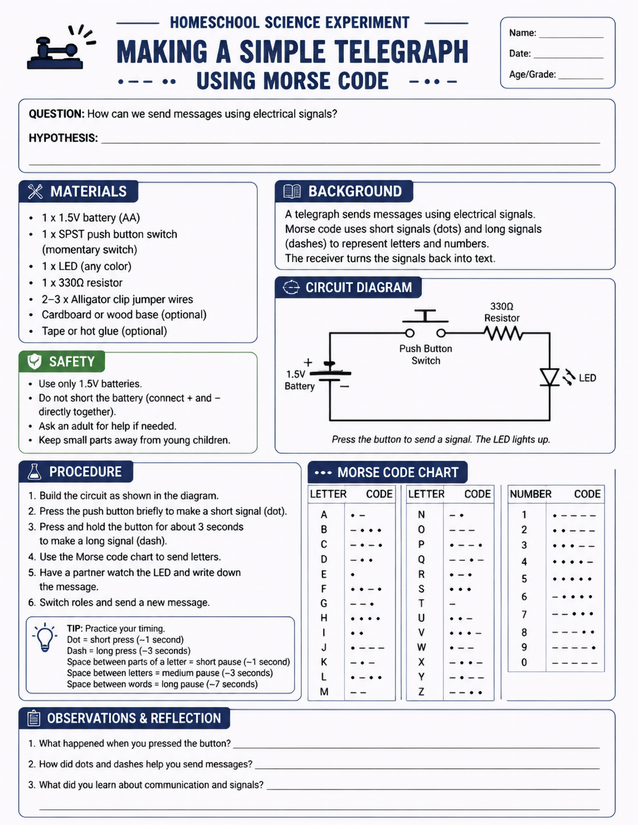
Grades 4-7 homeschoolers build a working LED telegraph circuit with this making a simple telegraph using morse code lab sheet.
Investigating with Making a Simple Telegraph Using Morse Code

Usage Notes
Most of the materials here are inexpensive and easy to source: a AA battery, an LED, and alligator clip jumper wires are all household-friendly electronics supplies. The 330-ohm resistor and SPST momentary push button switch may require a quick trip to an electronics or hobby shop, or a small online order. The safety section on the sheet is explicit: use only 1.5V batteries, never short the terminals directly, and keep small components away from young children, so review those notes with your student before assembly begins.

Printing Tips
Twenty-four-pound paper gives the sheet enough body to lie flat on a table while your student is pressing the button and writing observations at the same time. Loose sheets on a clipboard work well here since the circuit sits separately from the recording sheet, and the Morse code chart on the right side is reference material your student will glance at repeatedly throughout the activity.