Creative Minds 𖹭 Happy Hearts

Making a Terrarium with Desert Plants, Homeschool Science Lab Sheet
Sand, gravel, charcoal, and a glass jar: making a terrarium with desert plants turns a handful of household materials into a living mini ecosystem your student can observe for weeks.
Your student builds a layered desert terrarium from the ground up, placing drainage gravel, optional activated charcoal, cactus potting mix, and small desert plants like succulents or air plants inside a glass container. The lab sheet walks grades 3-6 through an eight-step procedure, then asks students to track what they see across four dated observation entries, noting plant health, moisture levels, and any visible changes over several weeks.
Making a terrarium with desert plants works as a standalone hands-on learning project or as the anchor activity in a desert biomes unit study. By the time your homeschooler completes the Observe and Record section, they can articulate what a mini ecosystem needs to stay alive, explain how desert plants store water, and compare a desert terrarium to a rainforest one, a question the Think and Reflect section asks directly.
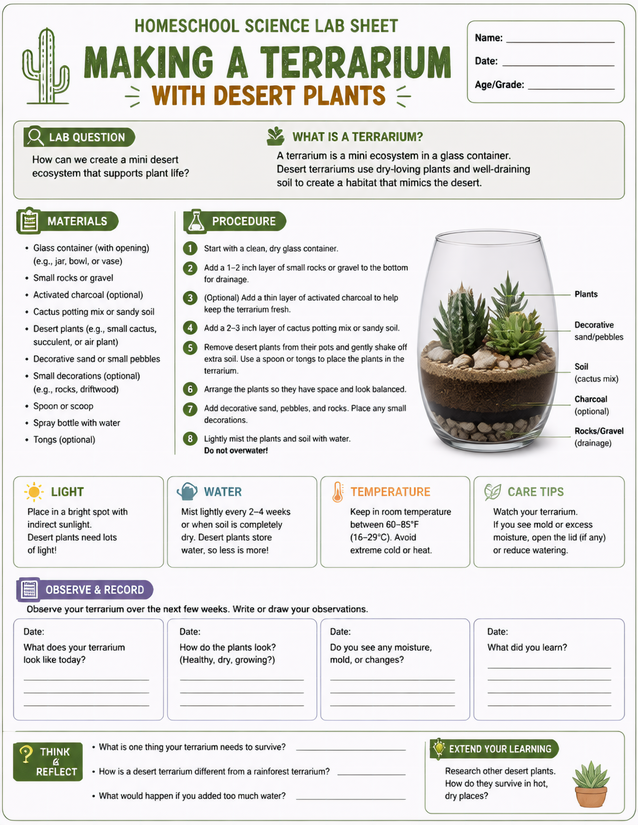
Grades 3-6 homeschoolers explore desert ecosystems by making a terrarium with desert plants using this structured lab sheet. Instant download.
Getting Started with Making a Terrarium with Desert Plants

Usage Notes
Everything on the materials list leans toward household or easy-to-source items: a glass jar or bowl, small rocks, and a spray bottle of water are likely already on hand. Cactus potting mix and small succulents require a quick trip to a garden center. Activated charcoal is listed as optional, so you can skip it without affecting the core procedure. No heat sources or chemicals are involved, making this a low-safety-concern project for younger students.

Printing Tips
Standard copy paper works fine, but 24-pound paper holds up better if your student is misting the terrarium nearby and sets the sheet on a damp surface. Slide the printed sheet into a plastic page protector to keep the Observe and Record boxes clean while the terrarium sits on a shelf for ongoing observation.