Creative Minds 𖹭 Happy Hearts

Rain Simulator to Study Erosion Patterns Lab Sheet
Bare soil, grass cover, and mulch side by side under a homemade rain simulator reveals exactly why ground cover matters. Your student records runoff and soil loss in real time with this rain simulator to study erosion lab sheet.
Structured around the question of how different ground cover types affect runoff and soil loss, this lab sheet walks students through building a PVC pipe rain simulator, preparing a divided tray with three test sections (bare soil, grass or plant cover, and mulch or rock cover), and collecting measurable runoff data from each section. The data table tracks runoff volume in milliliters and soil loss rated low, medium, or high, making this rain simulator to study erosion experiment a strong fit for grades 4-7 homeschoolers studying earth science or environmental science.
The sheet works well as a standalone unit study session or anchors a broader soil and water conservation sequence. Students complete an if-then-because hypothesis before they begin, then return to four analysis questions that push them to compare results across all three test areas and draw conclusions about how plants reduce erosion. Finishing the full sheet demonstrates data collection, controlled variable thinking, and evidence-based reasoning.
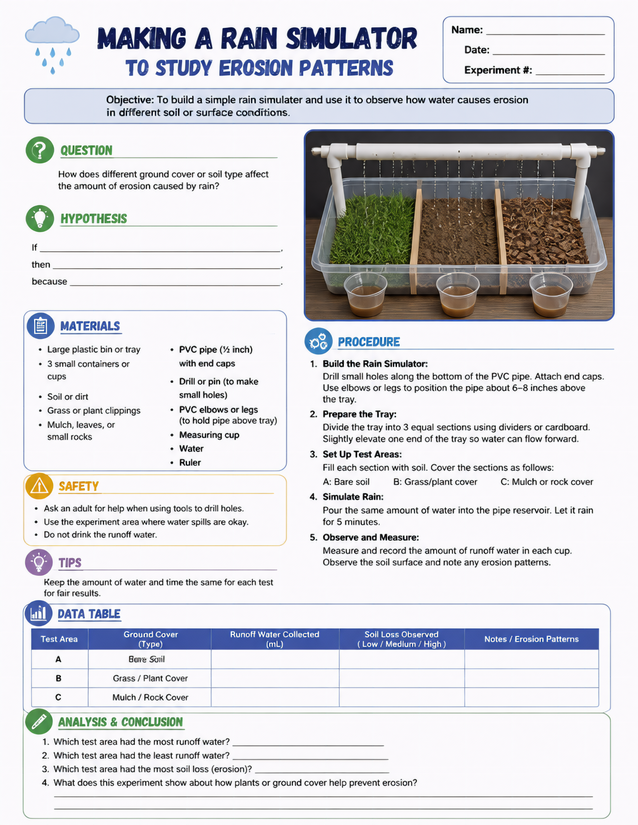
Build a rain simulator to study erosion with bare soil, grass, and mulch test sections. Ideal for grades 4-7 homeschoolers.
Investigating with a Rain Simulator to Study Erosion Patterns

Usage Notes
Most materials are household or hardware-store items: a large plastic bin or tray, soil, grass clippings or plant material, mulch or small rocks, and measuring cups. The one specialty item is half-inch PVC pipe with end caps and elbows, which requires an adult to drill small holes along the bottom. The safety section on the sheet specifically notes that an adult should handle the drilling step.

Printing Tips
Cardstock at 65 lb or heavier holds up well if the sheet gets set near a wet tray during the experiment. Loose on a clipboard works better than a lab notebook here since students will be moving between the tray and the data table repeatedly.