Creative Minds 𖹭 Happy Hearts

Sunscreen Effectiveness Lab Sheet, UV Bead SPF Comparison
Color-changing UV beads do all the convincing here. Your student sets up four containers, applies different SPF sunscreens, and lets the sun settle the sunscreen effectiveness lab sheet debate.
Students begin with a clear hypothesis: higher SPF blocks more UV radiation. The sunscreen effectiveness lab sheet walks them through an eight-step procedure using UV color-changing beads distributed equally across four labeled containers, each treated with a different sunscreen SPF, plus one control with no sunscreen. After 15 minutes of sun exposure, bead color changes tell the story. A results table tracks SPF number and bead color for each container, and two analysis questions push grades 4-7 students to explain which sunscreen performed best and which performed worst before writing a data-based conclusion.
This lab fits naturally into a unit study on radiation, skin health, or the electromagnetic spectrum, and it works as a standalone lesson when you want hands-on data collection without complex setup. Completing the sheet demonstrates a student’s ability to design a controlled experiment, record observational data in a structured table, and draw conclusions supported by evidence rather than guessing.
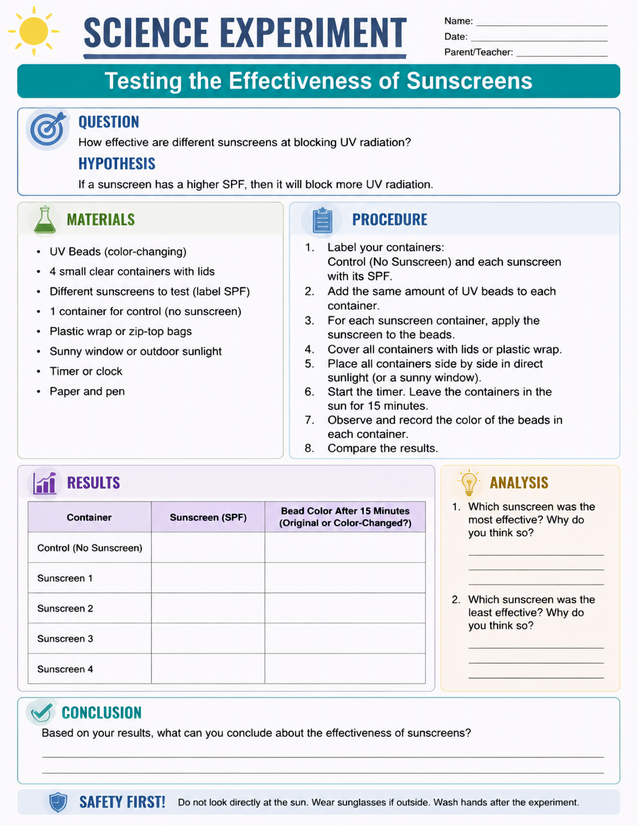
UV beads reveal which SPF wins in this sunscreen effectiveness lab sheet for grades 4-7 homeschoolers. Instant download.
Getting Started with the Sunscreen Effectiveness Lab Sheet

Usage Notes
UV color-changing beads are the one specialty item on the materials list. Everything else, including small clear containers with lids or zip-top bags, a timer, and paper and pen, is likely already in the house. The sheet includes a Safety First note reminding students not to look directly at the sun and to wear sunglasses if working outdoors.
Printing Tips
Standard 20-lb copy paper is fine here since students write results after the experiment, not while their hands are coated in sunscreen. Print one sheet per student and slip it into a lab notebook, or keep it loose on a clipboard for easy reference during the outdoor observation window.