Creative Minds 𖹭 Happy Hearts

Vaccine Antibody Model Lab Sheet, Pom-Poms and Clothespins
Clothespins as antibodies, pom-poms as germs and antigens: this vaccine antibody model lab sheet turns immune system vocabulary into something your student can hold in their hands.
Your student works through five numbered steps on this vaccine antibody model lab sheet, using a tray as the body, a small bowl as the white blood cell, green pom-poms as antigens, and clothespins as antibodies. A red pom-pom enters the scene in step four as the real germ invader, and the final step has your student use clothespins to physically stop it. A model key on the right side of the sheet defines each material before the activity begins. Four reflection questions at the bottom ask what each part represented and why vaccines matter, giving your student a written record of what the model demonstrated. This sheet suits grades 4 through 7 and works as part of a human body or microbiology unit study.
The vaccine antibody model lab sheet stands on its own as a single lesson or drops naturally into a broader immunology sequence alongside lessons on pathogens, white blood cells, or the lymphatic system. Because every step is photographed on the sheet itself, your student can self-direct through the procedure with minimal setup from you. Completing it shows they can connect a physical model to the abstract concept of immune memory, which is a meaningful benchmark for this age range in hands-on science.
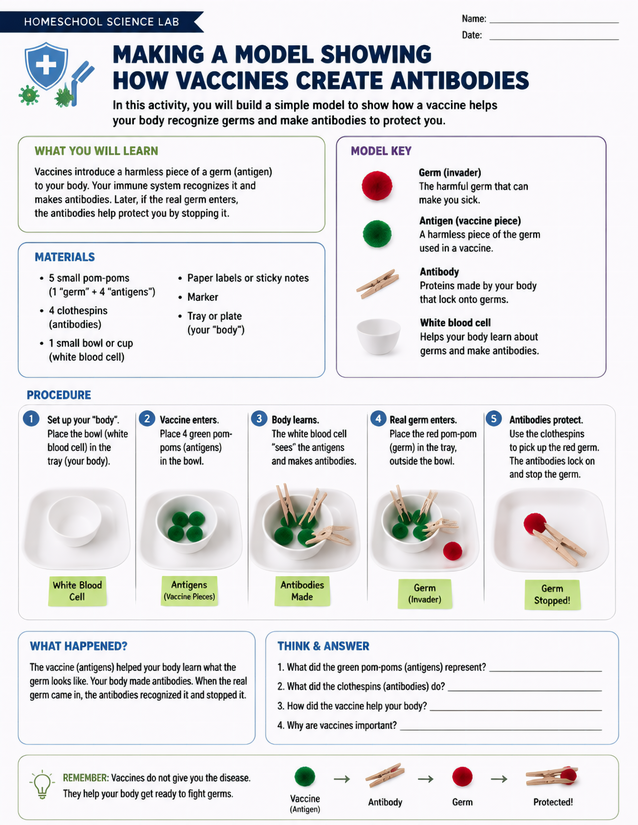
Grades 4-7 homeschoolers build a vaccine antibody model lab sheet using pom-poms and clothespins to explore immune response. All household materials.
Getting Started with Your Vaccine Antibody Model Lab Sheet

Usage Notes
Every material on this sheet is a household or craft-bin item: pom-poms in two sizes and colors, standard wooden clothespins, a small bowl, a tray or plate, sticky notes or paper labels, and a marker. No specialty supplies are required. The sheet involves no heat, liquids, or sharp tools, so safety concerns are minimal for independent student use.

Printing Tips
A 20-lb copy paper works fine here since students write short answers rather than extended notes. Slip the completed sheet into a lab notebook or a clear page protector in a science binder so the procedure photos stay visible as a reference during the activity.