Creative Minds 𖹭 Happy Hearts

Writing Numbers in Expanded Form, 10-Problem 3rd Grade Worksheet
Ten three-digit numbers, one blank line each. Writing numbers in expanded form gets concrete practice here, from 236 all the way to numbers with zeros in the middle like 604 and 903.
Your student works through ten problems asking them to break apart three-digit numbers into their hundreds, tens, and ones values using addition notation. A place value reference chart at the top shows 347 broken into 300 + 40 + 7, giving your homeschooler a model to lean on before working independently. This sheet sits squarely in 3rd grade math territory, aligning with early number sense standards for place value.
Writing numbers in expanded form this way pushes students to think about what each digit actually represents rather than treating a number as a single unit. Numbers like 604 and 150 are intentionally included to surface zero as a placeholder, which is where many students pause and think hardest. Assign this as focused independent practice during your math block or use it as a quick check after a place value lesson.
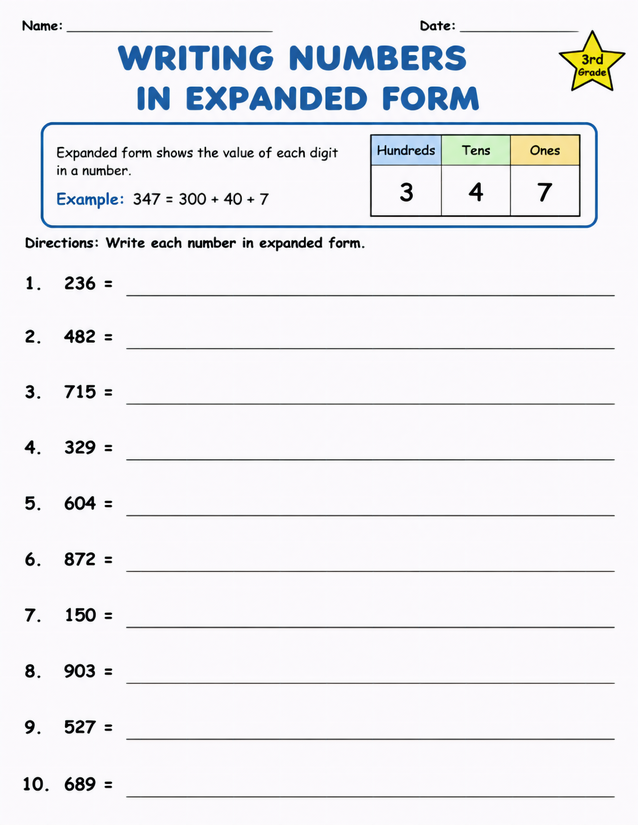
Expand three-digit numbers across ten problems with this writing numbers in expanded form worksheet sized for 3rd grade math.
Practicing Writing Numbers in Expanded Form with Three-Digit Problems

Usage Notes
Pencil works best here since students may self-correct when a zero-placeholder problem catches them off guard. The blank lines are wide enough for neat expanded notation without cramping. Independent practice is the natural fit, though walking through the first two problems together helps students who are new to the concept.

Printing Tips
Twenty-four pound paper keeps pencil writing clean and prevents bleed-through if a student presses hard. Portrait orientation is set, and printing two copies gives you one for practice and one to keep as a clean assessment.