You’ve decided to get more prepared. But now you’re standing in the store, and you have absolutely no idea how much of anything you actually use. So, you give it your best guess. You grab a few extras of things you think you need and find that you’ve forgotten completely about things you use every day. You get home and the whole thing feels like a mess.
That’s exactly why auditing comes before buying.
The goal here is simple: figure out what your household genuinely consumes in a normal week, what you already have on hand, and where the gaps are. Once you know that, every purchase decision gets easy and specific.
Here’s how to do it:
That last number is your actual shopping list.
A few things worth knowing as you go through this:
- Households with infants, elderly family members, or people managing chronic conditions will have a longer, more specific list than average. Plan for your real household, not a hypothetical one.
- Medications and medical supplies (think blood pressure monitors, diabetic testing strips, inhalers) are often the most overlooked category and the hardest to replace quickly.
- Paper products, dish soap, and laundry detergent get used faster than most people realize once they actually track it.
- Fresh food doesn’t factor into long-term preparedness, but the shelf-stable ingredients you’d cook with absolutely do.
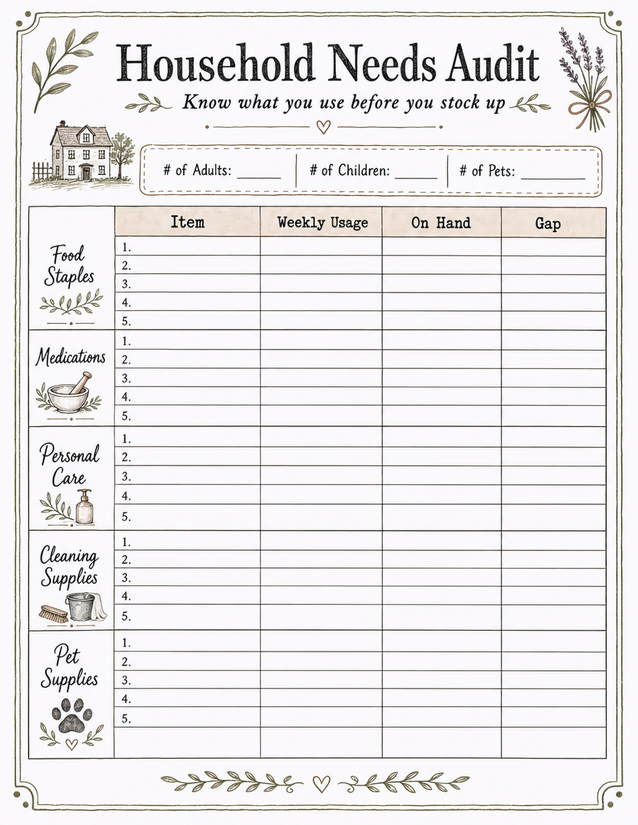
The Household Needs Audit Worksheet helps to make this easier. It has columns for item name, weekly usage, current supply on hand, and your gap number. Print it out, fill it in once, and you’ve got a document that drives everything that comes next in this series.
One thorough audit today will save you from expensive, wasteful panic-buying the moment a shortage actually hits.
Household Needs Audit