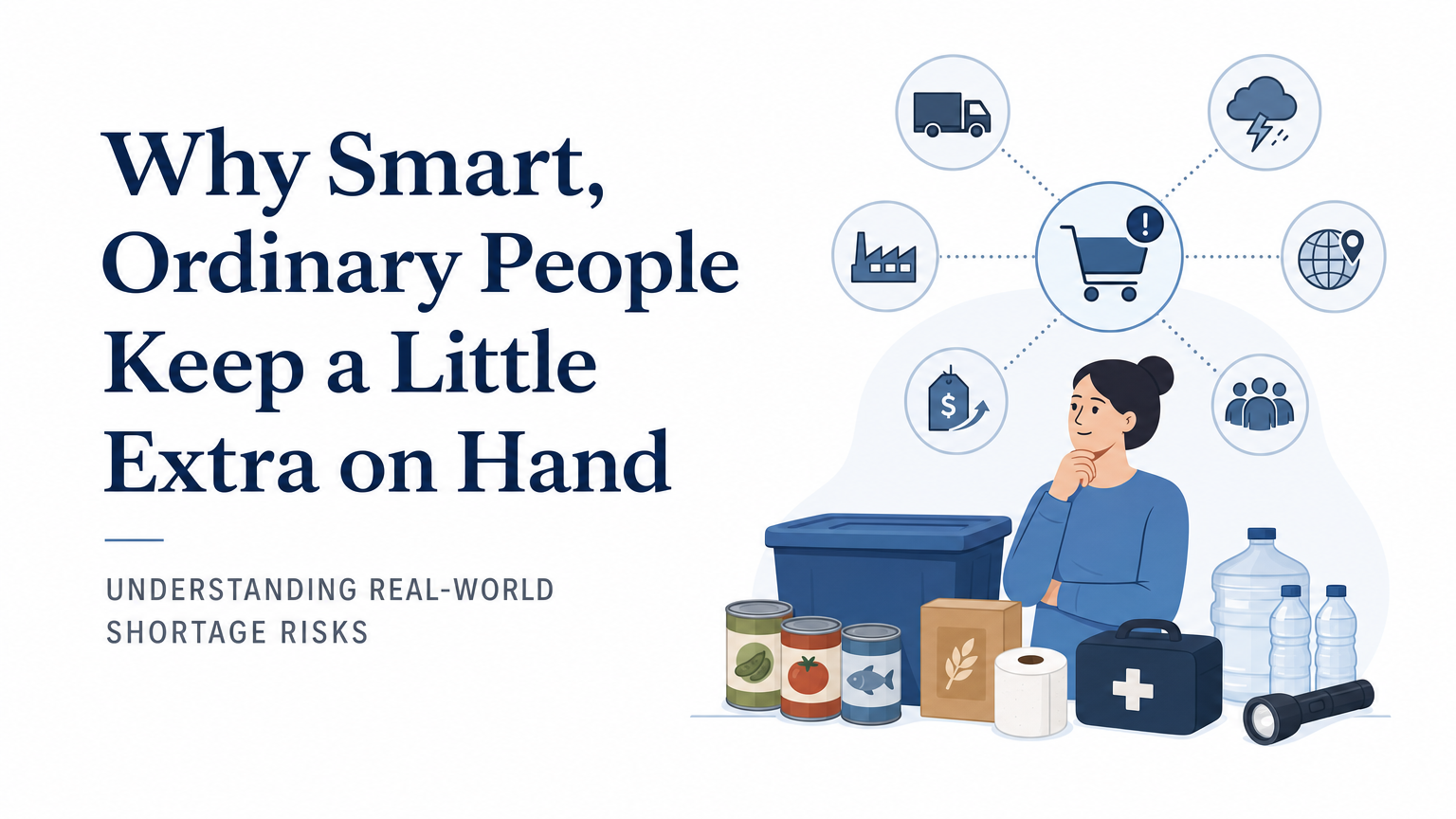
Understanding Real-World Shortage Risks
The grocery store shelf is full right now. So is your pantry, probably. That’s exactly the right moment to think about this.
Most people associate emergency preparedness with extreme scenarios, bunkers and people who’ve gone a little too far down the rabbit hole. But keeping a reasonable backup supply of everyday essentials has nothing to do with the Prepper world. It’s just sensible housekeeping. It’s simply common sense just like keeping a spare tire in your car “just in case” even though you’re not expecting a flat tire.
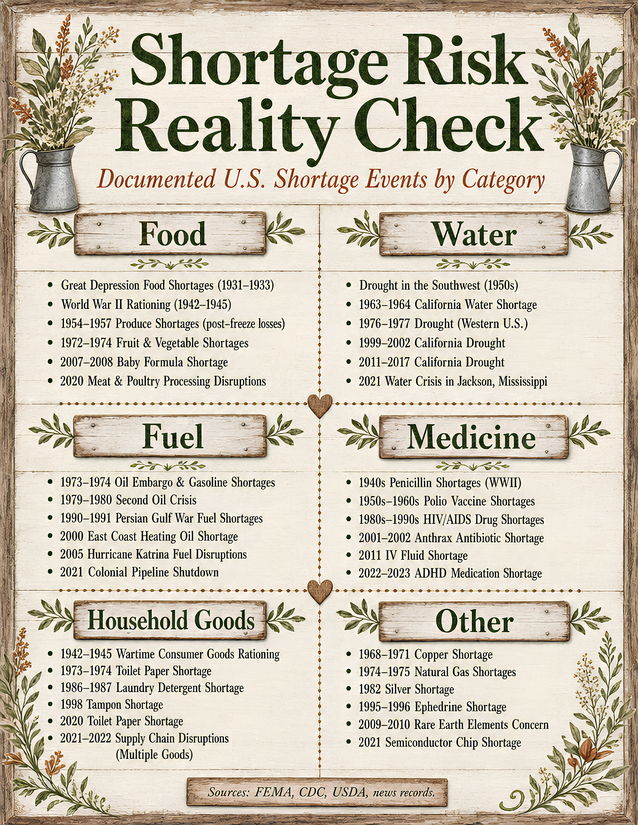
Here’s what’s actually true: shortages happen regularly, to ordinary people, in ordinary places. They don’t always make the national news, and they rarely look dramatic. A hurricane knocks out regional distribution for two weeks. A bacterial contamination triggers a massive food recall and empties store shelves for days. A cyberattack on a fuel pipeline causes panic buying that strips gas stations dry. These aren’t hypothetical scenarios. Every single one of them has happened in the United States within the last decade. And none of us forgets how hard it was to find toilet paper during the height of the Covid-19 pandemic!
The real causes of shortages are pretty well-documented:
- Natural disasters (hurricanes, ice storms, wildfires, flooding) that disrupt transportation and distribution networks.
- Food and product recalls that pull items from shelves with little warning.
- Supply chain failures, which the pandemic made viscerally familiar to almost everyone.
- Cyberattacks on infrastructure, including water systems, power grids, and fuel pipelines.
- Environmental pressures on agriculture (draught, crop disease, etc.) that affect food availability.
None of these require a worst-case scenario to affect your household. Even a moderate, localized event can leave you scrambling if your cupboards are bare.
What a little preparation actually gets you:
- You’re able to feel more calm during a local emergency because you’re not competing for the last can of soup.
- You can avoid paying inflated prices during a panic-buying surge.
- You can eat relatively normally during a recall that wipes out a product you use regularly.
- Your household routine remains relatively intact when supply hiccups make specific items temporarily unavailable.
- You can feel genuinely confident rather than anxious when you hear about a coming storm.
This series is going to walk through specific categories of daily needs, one at a time, with practical and realistic suggestions for building up a sensible buffer. Just the basics: food, water, medications, hygiene products, household supplies. Nothing extreme. Nothing expensive all at once. Just steady, practical steps that fit real life.
That full shelf at the grocery store is a great sign. And the best time to make sure you’re ready for when it isn’t is right now, while everything is fine.
Start with just one category. Pick the one that would disrupt your household the most if it disappeared for two weeks and go from there.
Reference Chart